The Idea + The Book
Experience as a Medicine
Because the molecule isn't the whole story.
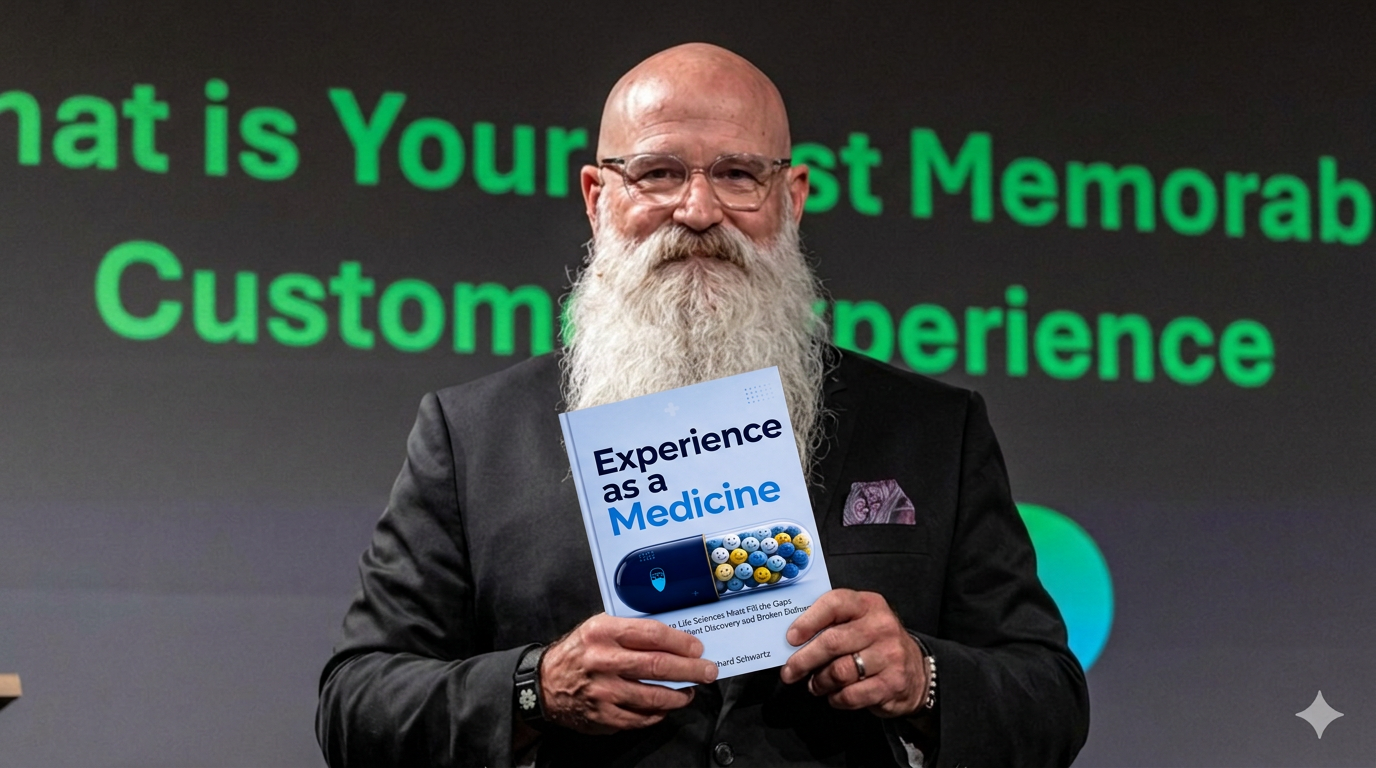
A Personal Note
I did not set out to write a book. I was trying to figure out how to navigate the healthcare system in a time of critical need. Along the way, I realized my 20 years in customer engagement was no longer meaningful — and certainly not what is possible.
A signed perspective from 20 years inside pharma and medical device — and what comes next.
The Synopsis · Key Themes
What you'll discover inside.
Four threads run through the book — from why it was written to the new engagement model it proposes.

01 / 04
A forward-looking perspective
The Next Engagement Model for Life Sciences presents a forward-looking perspective on how the life sciences industry must evolve beyond traditional, product-centric approaches to deliver meaningful, patient-centered experiences.

02 / 04
Experience as a Medicine
The book shares evidence and insights that “experience” itself is becoming a critical driver of both health and business outcomes.

03 / 04
The new expectation
In an era where patients and health professionals expect the same level of personalization, convenience, and digital interaction they receive in other industries, life sciences organizations must rethink how they engage across the entire customer journey.
04 / 04
From episodic to continuous
EaaM introduces a new engagement model that shifts focus from episodic interactions with healthcare professionals to continuous, data-driven relationships with patients, caregivers, and broader healthcare ecosystems.
From the Pages
Selected passages
"I did not set out to write a book. I was trying to figure out how to navigate the healthcare system in a time of critical need. Along the way, I realized my 20 years in customer engagement in pharma and medical device was no longer meaningful — and certainly not what is possible."
— From the Introduction
"Better experiences do not just improve perception, they improve outcomes. They create clarity, confidence, and continuity for patients, providers, and companies."
— On Experience as a Medicine
"EaaM introduces a new engagement model that shifts focus from episodic interactions with healthcare professionals to continuous, data-driven relationships with patients, caregivers, and broader healthcare ecosystems."
— On the new model